
Quick answer: St. Petersburg landscaping is Gulf-coast, salt-exposed work on sandy Pinellas County soil: salt-tolerant St. Augustine and Seashore paspalum turf, drought-smart beds, and irrigation tuned to Southwest Florida Water Management District (SWFWMD) restrictions. We design, install, and maintain landscapes across St. Pete’s 33701-33716 zips, from the Old Northeast and Snell Isle to Shore Acres and the beaches, with hurricane-season tree care built in. Free written estimates: (813) 859-6506.
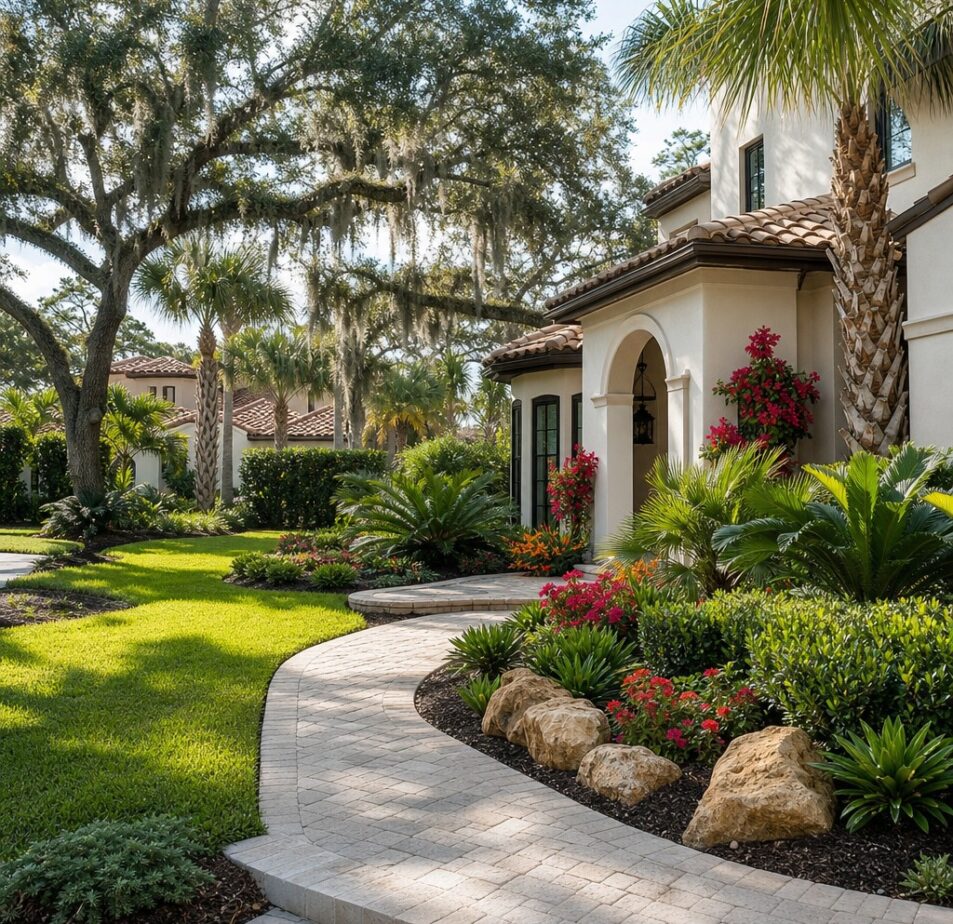
Gulf-Coast Landscaping on the St. Petersburg Peninsula
St. Petersburg sits on a peninsula between Tampa Bay and the Gulf, and that location defines the landscaping. Salt spray, sandy fast-draining soil, intense summer sun, and a high water table near the water all shape what survives here. The lawns and beds that thrive in inland Central Florida are not automatically the right call on a Snell Isle or Shore Acres lot exposed to salt air.
We work across St. Pete’s 33701 through 33716 zips, from the brick streets of the Historic Old Northeast and Kenwood to the waterfront in Shore Acres and the approaches to the Gulf beaches, matching plant and turf choices to each property’s salt exposure and drainage.
Salt-Tolerant Turf and Plantings
On salt-exposed Pinellas lots we lean on salt-tolerant turf: established St. Augustine cultivars for most yards, and Seashore paspalum where salt spray or reclaimed-water irrigation is heaviest near the water. In beds we use Florida-Friendly, salt-tolerant plants such as muhly grass, firebush, sea grape, and saw palmetto rather than fighting to keep salt-sensitive species alive.
Sandy St. Pete soil drains fast and holds little, so we build beds with organic matter and mulch to retain moisture and cut watering, which also helps you stay inside the SWFWMD schedule.
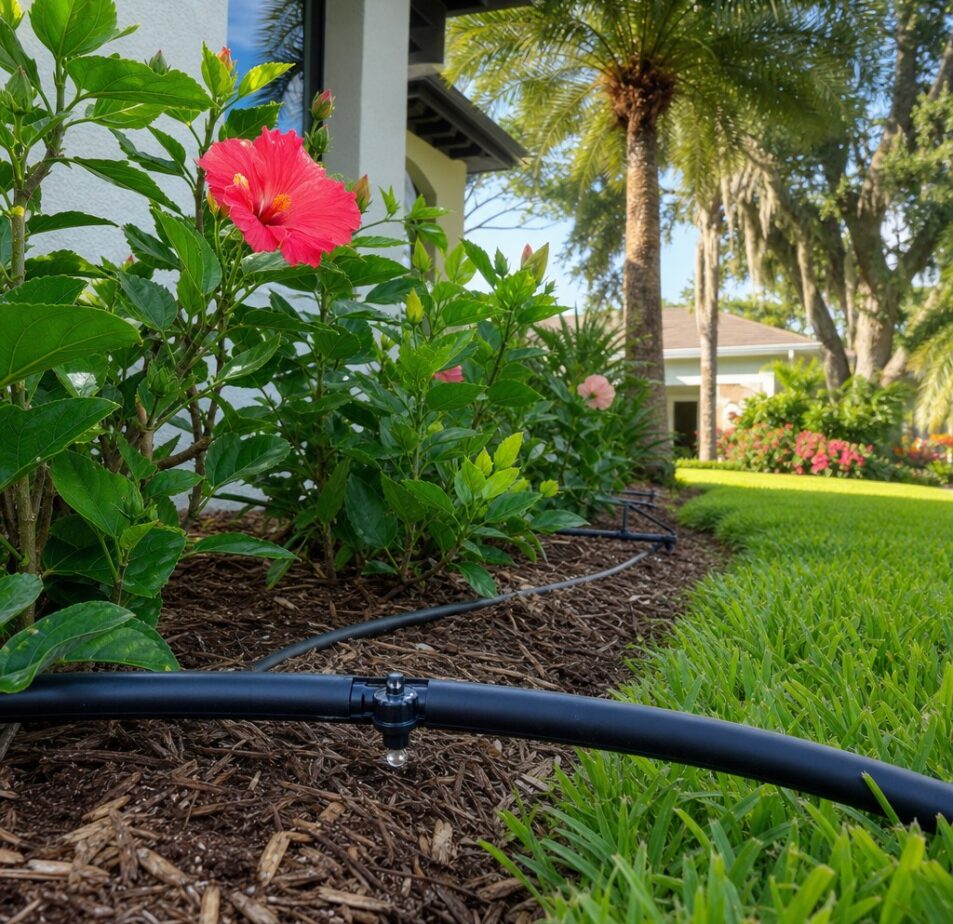
Irrigation Under SWFWMD Watering Rules
St. Petersburg falls under the Southwest Florida Water Management District (SWFWMD, or Swiftmud), not the St. Johns district that governs the Orlando side of the state, so the watering days and rules are different. We set controllers to the current SWFWMD schedule, install rain sensors (required in Florida), and convert beds to drip so water reaches roots instead of evaporating off sand in the afternoon sun.
Many St. Pete properties also run reclaimed water, which is salt-leaning and changes which plants and turf hold up. We account for that when we design irrigation zones.
Hurricane Season and the St. Petersburg Areas We Serve
Tampa Bay is one of the most storm-surge-exposed metros in the country, so hurricane readiness is part of St. Pete landscaping, not an afterthought. Before the June-to-November season we thin and structurally prune trees to cut wind load, clear dead limbs, and check that drainage and loose materials will not become hazards.
We serve all of St. Petersburg and the surrounding Pinellas communities, including Gulfport, the Old Northeast, Snell Isle, Shore Acres, Kenwood, and the beach approaches toward Treasure Island and St. Pete Beach.
Frequently Asked Questions
What grass holds up best in salt-exposed St. Petersburg yards?
Salt-tolerant St. Augustine cultivars handle most St. Pete lawns, and Seashore paspalum is the better choice where salt spray or reclaimed-water irrigation is heaviest near the water. On sandy Pinellas soil we add organic matter and mulch so the turf needs less water and stays inside the SWFWMD schedule.
Which watering district covers St. Petersburg, and what are the rules?
St. Petersburg is under the Southwest Florida Water Management District (SWFWMD / Swiftmud), not the St. Johns district. SWFWMD runs a year-round schedule limiting irrigation days and hours by address. We set your controller to the current SWFWMD schedule, fit the legally required rain sensor, and convert beds to drip to cut waste.
How do you prepare a St. Petersburg landscape for hurricane season?
Before the June-to-November season we structurally prune and thin trees to reduce wind load, remove dead limbs, check drainage, and secure loose materials. Tampa Bay’s storm-surge exposure makes pre-season tree care a priority, not an afterthought.
Why does sandy St. Pete soil need special handling?
Peninsula soil here is sandy and fast-draining, so it holds little water or nutrients and dries quickly in the sun. We amend beds with organic matter, mulch to hold moisture, and choose Florida-Friendly salt-tolerant plants, which together reduce watering and keep landscapes healthy between the legal watering days.
What does landscaping cost in St. Petersburg?
It depends on lot size, salt exposure, the turf and plant plan, and any irrigation or hardscape work. Every St. Pete property is quoted individually with a free written estimate. Call (813) 859-6506 to schedule.