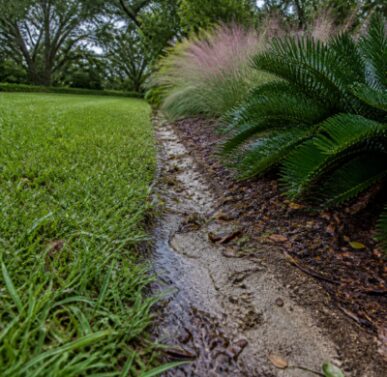
Property-condition check: How does the Landscape Design process work in Tampa?
Tampa landscape design weighs Gulf Coast sand, St. Augustine or Bahia turf, salt exposure, Florida-friendly plants, stormwater flow, and irrigation zoning. Typical pricing: $1,500-$15,000 per design. Free written estimates. Call (813) 859-6506 for quotes throughout Hillsborough County.
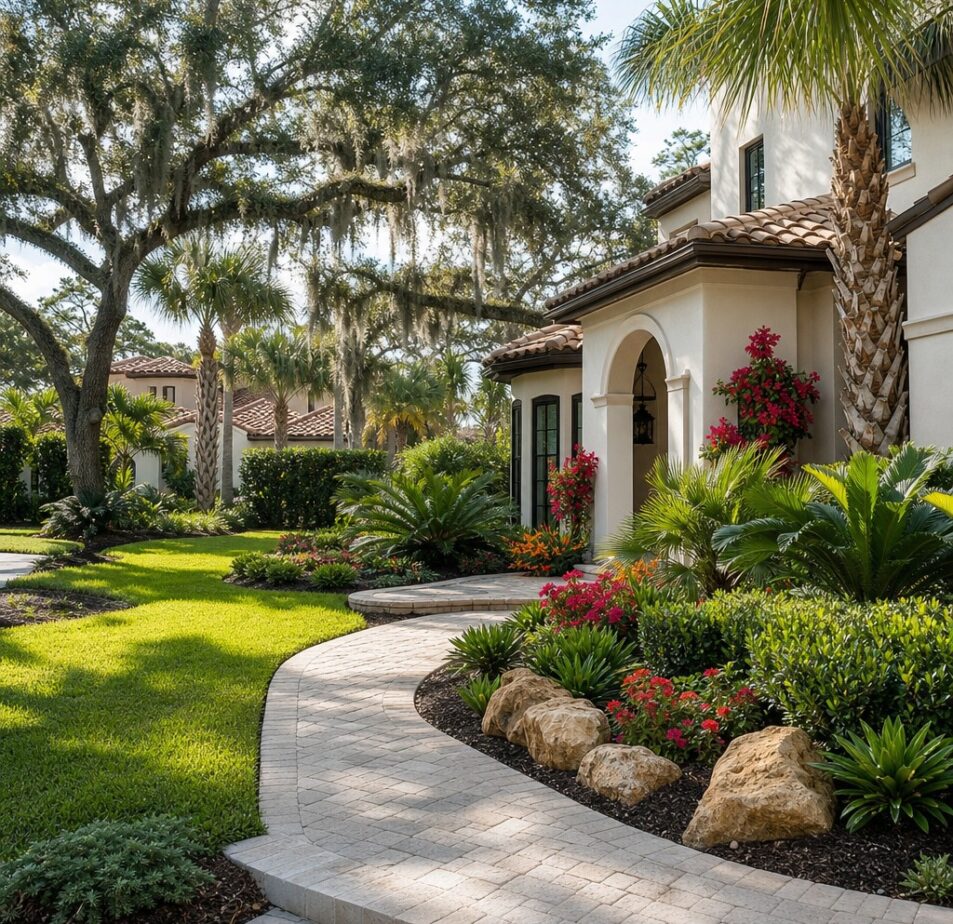
Landscape design in Tampa is equal parts horticulture and civil engineering. The horticulture part is about choosing the right plants. They have to thrive in the Tampa Bay area’s humid summers, heavy summer rains, and fast-draining sandy soil. The civil part is about understanding what happens to that sand when heavy rain flushes nutrients through it or it dries out under a summer drought. Then we design beds, hardscape transitions, and drainage features that move with the ground instead of fighting it.
We design and install residential landscapes across Tampa and its surrounding suburbs: Brandon, Riverview, Wesley Chapel, Carrollwood, Plant City, Temple Terrace, Town ‘n’ Country, Apollo Beach, Valrico, New Tampa, and Lutz. Every design starts with site analysis: sun exposure, existing soil, drainage patterns, and the client’s maintenance tolerance. It ends with a planting plan weighted heavily toward the Tampa Bay area-native and regionally adapted species.
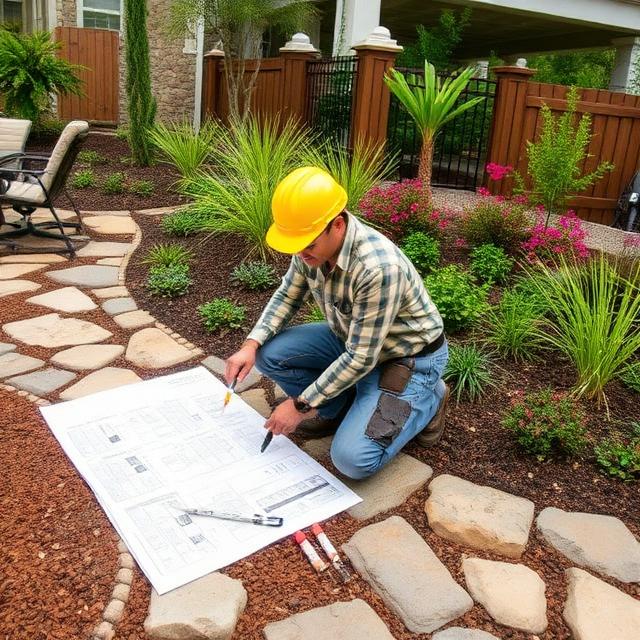
For a Tampa landscape plan, first document the property boundaries, sun and water observations, existing planting and hardscape, drainage concerns, access, and the requested use of each area. Have the designer distinguish field observations from items that require survey, testing, or separate specialist review.
A Tampa design proposal should define its drawing set, dimensions, planting and material notes, drainage and irrigation coordination, revision limits, and excluded specialist work. Confirm which documents are concepts and which, if any, are intended for installation.
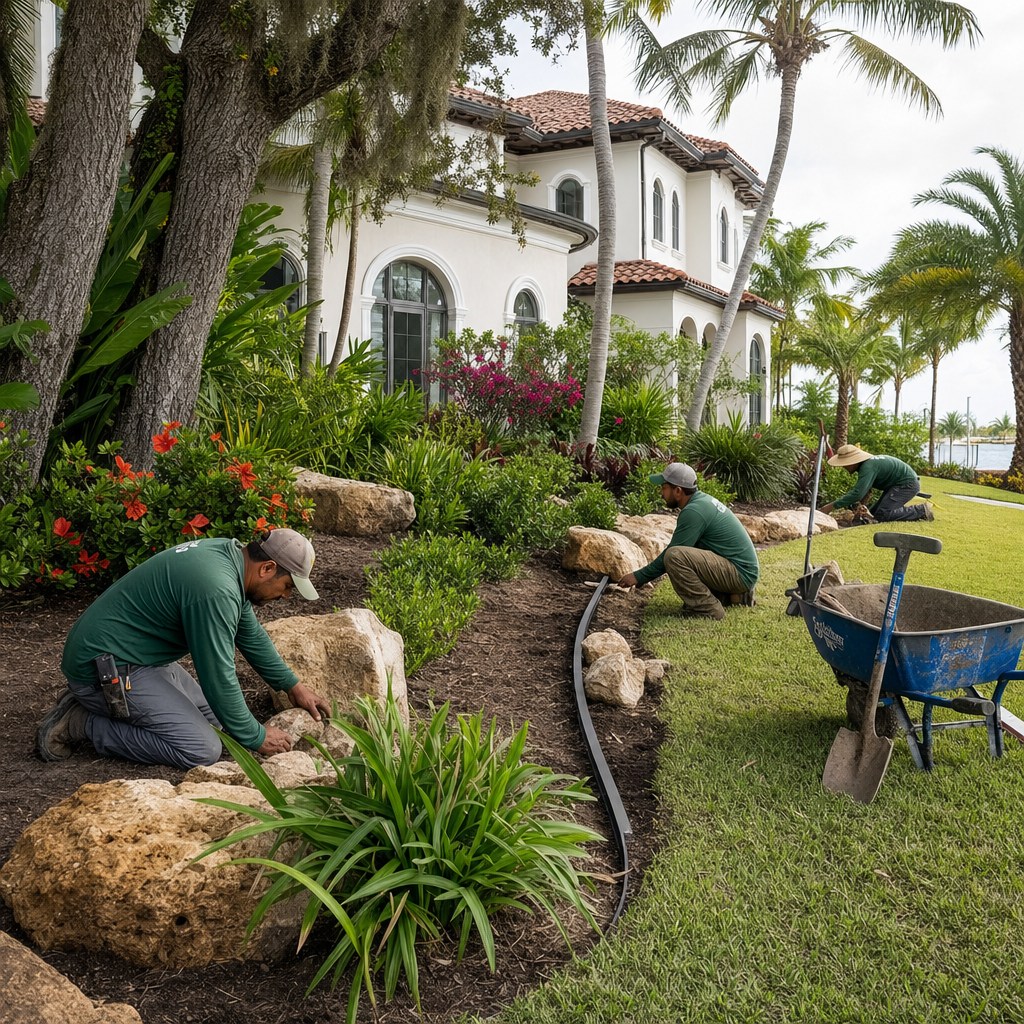
Step three is installation. Our crews dig beds to proper depth and amend the sandy soil with compost and pine fines for moisture and nutrient retention. They install plants at correct spacing and depth. They mulch at 2 to 3 inches, not the 5-inch mulch volcanoes that kill so many Tampa landscapes. They tie in any new irrigation coverage required for establishment.
the Tampa Bay area-Native and Adapted Plant Palette
Our default plant palette is weighted heavily toward species that evolved in or adapted to the Tampa Bay area’s climate and soil. For flowering perennials: purple coneflower, Florida coneflower (a federally protected Florida endemic), black-eyed Susan, butterfly weed, and native asters. For structural plants: oakleaf hydrangea, serviceberry, Eastern redbud, and native viburnums. For ornamental grasses: little bluestem, switchgrass, and muhly grass. Flowering dogwood and tulip poplar anchor shaded and focal-point positions.
For a Tampa planting plan, compare each proposed species with the observations recorded for that location, including light, drainage, available space, irrigation, nearby structures, mature dimensions, and upkeep. A list entry alone does not establish suitability or expected inputs.
On a Tampa design, require each plant line to identify the species and cultivar, intended location, site observations, mature clearance, irrigation responsibility, maintenance, and replacement terms. Selection should follow the documented property conditions, not a broad label.
Designing Around Tampa’s Sandy Soil
Tampa sits on deep, sandy soil that drains almost too fast and holds little water or nutrient. In low-lying coastal flatwoods (common across south Hillsborough and Manatee counties) the water table sits close to the surface. That reality dictates how we build planting beds: we enrich the sand heavily and, where drainage is poor, we build up. Raised beds with proper soil mixes outperform plain native sand in most the Tampa Bay area soil profiles.
Water retention is the other constant. Sandy soil drains almost too fast and holds little moisture. That is fine in a July downpour but punishing in a dry spell, when unamended sand bakes out and plants stress between rains. We work in heavy organic matter, mulch deeply, and grade so heavy summer rain drains away from beds without washing them out. Every design accounts for both where water goes in a three-inch rain event and how the soil holds moisture between them.
For a Tampa project proposed as one installation, have the documents enumerate each covered zone, task boundary, material, coordination responsibility, approval, exclusion, and completion check. A package description should not stand in for that itemized scope.
When a Tampa design is staged, the written plan should define each phase by what you get rather than a preset number of rounds. Identify drainage and access dependencies, interim maintenance, material interfaces, exclusions, approval points, and what must be rechecked before later work.
A Tampa landscape plan should flag every interface with work outside the design agreement. Assign responsibility for field verification, water-system review, drainage, removals, access, inspections, change approval, and restoration before installation begins.
A Tampa design inquiry should identify the address, project zones, observed concerns, access, available surveys or plans, priorities, and timing constraints. Before authorization, obtain written evaluation steps, what you get, exclusions, fees, payment stage, and revision terms from the provider.
How do I fix standing water in my Tampa yard?
Standing water in Tampa yards comes from flat lots, a high water table, and summer storms that outpace sandy soil. Fix it by regrading toward a swale, extending downspouts, and installing french drains where water lingers. On the lowest lots, raised beds and drainage-tolerant plantings work better than fighting the water table.
How do recorded property conditions shape Landscape Design?
Tampa design reviews Gulf Coast sand, St. Augustine or Bahia turf, salt exposure, heavy-rain flow, Florida-friendly plantings, and irrigation zones that fit the lot.
Process Overview
- Site assessment and consultation
- Written estimate with line-item scope
- Scheduled work window confirmed
- Crew executes against the written estimate
- Completion walkthrough with the homeowner